
Porsche 964 A/C fault diagnosis
F/51 LRS investigates a 964 whose converted R134a air conditioning will not cool properly. Relay checks, gauge readings and leak searches lead to component replacement, but the cold-air result remains unresolved; replies clarify the control signal and wiring differences.

Select a photo to view its source post. The source may require sign-in.
A clutch that responds to external power
F/51 LRS says the previous owner converted the 964 to R134a and that the A/C had not worked properly since he acquired the car. The compressor clutch engaged when supplied externally and when the relay was bypassed, but he did not find the feed he expected at the car’s clutch wiring. He initially wondered whether to trace the harness or test the climate-control unit. These observations did not establish a failed CCU or a completed repair.
Pressure and vacuum readings add another question
The owner rented manifold gauges and a vacuum pump, then reported that the system would not pull a vacuum. He confirmed that the gauge valves were open. He later bought another gauge set but still reported an unhelpful reading. These reports did not establish a leak location.
A dye search finds no visible leak
The owner added dye and inspected accessible A/C lines and joints after removing wheel liners and several exterior panels. He reported finding no visible leak after a short run. That describes what he saw during that search; it does not establish that every part of the system was leak-free.
ToreB distinguishes a ground command from the power feed
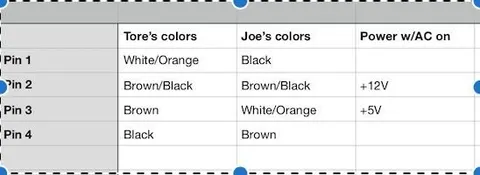
ToreB explains that the CCU commands the compressor relay with an active-low ground signal routed through the pressure switch; he separately identifies the relay’s positive feed from the front fog-light circuit. This differs from simply expecting a positive voltage on the control wire. The owner’s comparison table records wiring colors that did not match the reference he was following. ToreB later says 964 and 993 wire colors can differ and returns to checking the actual control signal and evaporator-sensor condition. The table is the owner’s diagnostic comparison, not a verified replacement pinout.
Component replacement still does not restore cold air
In his later update, F/51 LRS says he replaced the evaporator, diverter valve and drier. He added R134a, reported pressure readings and a running condenser fan, yet still had no cold air while the compressor was externally engaged. His interpretation that the system held pressure did not identify the cause of the remaining fault. The account does not demonstrate a successful CCU repair, a confirmed compressor diagnosis or a validated refrigerant-charge procedure.
The final replies do not converge on a diagnosis
Deserion questions the reported pressures and asks about the mixing-chamber and evaporator sensors. ToreB explicitly disagrees and repeats the need to distinguish the CCU ground command, pressure-switch interruption, evaporator sensor and relay power feed. The owner says sensor cleaning was not something he knew had been done. The thread ends without a confirmed cause or a cold-air follow-up, so these remain attributed diagnostic suggestions rather than a consensus or a proven fix.
ffc’s drain photograph is from a different car
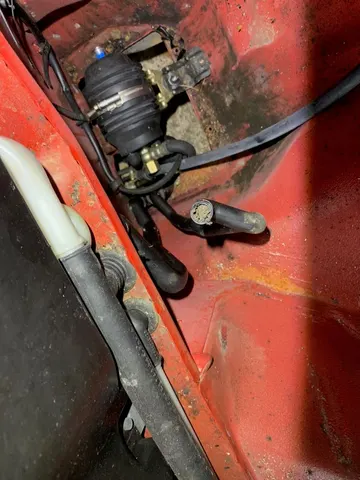
When the discussion turns to whether evaporator dye would appear at the drain, ffc says it would not have on his car and shows the drain as he found it during disassembly. The photograph belongs to that commenter’s vehicle. It does not show the condition of F/51 LRS’s drain or establish the location of his A/C fault.
Deserion’s separate rental-equipment check
Deserion asked about valve positions, connections and hose seals. In his separate experience, a missing seal in rented equipment had caused a vacuum-test problem. That account raises an equipment check; it does not establish the cause of F/51 LRS’s readings.
Source reply ↗ · Deserion