
Porsche 996 oil-cooler leak after replacement
studio112 first suspected the oil-cooler seals, then reported that the original leak came from the power-steering pump. Two replacement coolers reportedly leaked at the mounting face; reinstalling the original cooler with new O-rings ended the cooler leak.

Select a photo to view its source post. The source may require sign-in.
The cooler was replaced while the seals were suspected
studio112 asked for access photographs and practical tips for reaching the engine oil cooler. He suspected four dried-out O-ring seals after winter storage and planned to replace the cooler as well while it was accessible. He later said the AOS had already been done a year earlier. This was the owner’s initial assessment, rather than an established cooler fault.
The original leak was traced to the power-steering pump
In a later update, studio112 said the original cooler had not been leaking: the original leak came from the power-steering pump. After the workshop installed a new OEM Behr cooler, a different leak appeared between the cooler and the engine block. Cleaning the block and fitting another set of O-rings reduced that leak but did not stop it, according to the owner.
The original cooler went back in with new O-rings
studio112’s closing report blamed warped mounting bases on both replacement coolers, which he said prevented the new O-rings from seating properly. He reported having all three coolers pressure-tested with satisfactory results, then reinstalling the original cooler with new O-rings, ending the cooler leak. He said the work was completed with the engine in the car, although access was tedious. This account does not document the repair or later condition of the power-steering pump.
Another owner left a non-leaking cooler in place
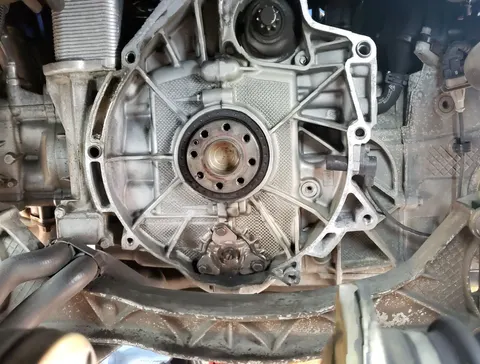
Eurocarguy911 described a separate clutch job during which he had a replacement cooler ready. With the transmission removed, he inspected the area, saw no visible leak and returned the unused replacement. His accompanying photograph is from that separate clutch job.
An O-ring-only repair was a different owner’s experience
DSC800 reported a small coolant seep in a separate 2000 car that had spent ten years barely driven. He changed the cooler O-rings while the transmission was out for clutch and IMS-bearing work and described the coolant-side rings as deformed. In a later reply, he reported about 5,000 miles since that work with things still going well. He also admitted estimating the bolt tightness because his torque wrench would not fit; this is not a verified tightening specification.
Replacement advice and reported outcomes differ
amargari advised replacing the cooler when undertaking O-ring work. That advice sits alongside studio112’s reported problems with two replacement parts and Eurocarguy911’s decision to leave a non-leaking cooler alone. These are distinct owners’ reports and opinions, not a tested replacement policy or a failure rate for new coolers.